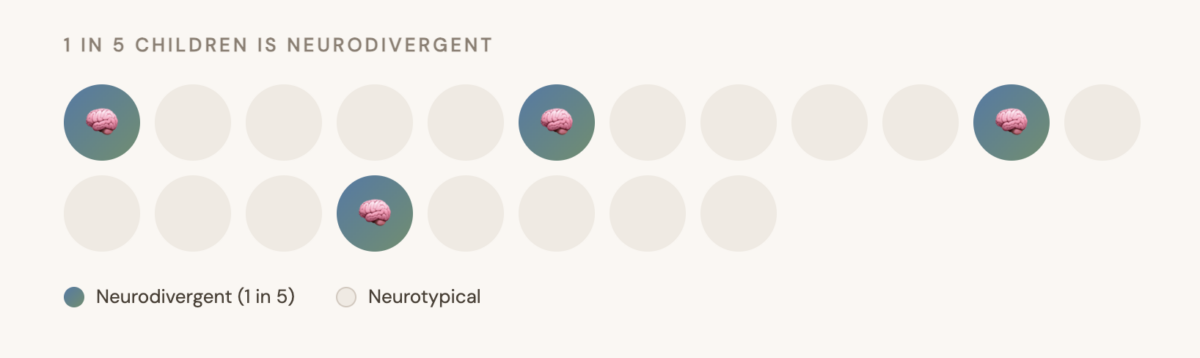
1 in 5 children is neurodivergent. Not broken. Not behind. Simply wired differently — and deserving of support that fits how their brain actually works.
Neurodiversity is not a diagnosis. It’s a way of understanding the natural variation in human brain function. Some brains are wired in ways that differ from what’s considered “typical” — and those differences affect how a person learns, processes sensory information, communicates, and moves through the world.
What does “neurodivergent” mean?
A neurodivergent child has a brain that works differently from the neurotypical majority. This difference isn’t a defect. It’s a variation — one that comes with both genuine challenges and, often, distinct strengths.
Prevalence: Approximately 1 in 5 children (20%) is neurodivergent in some way. In the US alone, that's around 14.8 million children. The number of identified cases has risen not because these differences are becoming more common — but because we're getting better at recognising them.
🧩 Autism spectrum
⚡ ADHD
📖 Dyslexia
🎧 Sensory processing
🤸 Dyspraxia
Neurodivergence is not a problem to fix
This is the most important shift in how we talk about neurodiversity. The challenge is not the child’s brain. The challenge is the mismatch between how their brain works and the environments, systems, and expectations built for a different kind of brain.
When neurodivergent children receive support that fits their neurotype — rather than demanding they adapt to a neurotypical mould — outcomes are dramatically different. They develop confidence, competence, and the skills to navigate the world on their own terms.
Common myths — and what's actually true
 Myth
Myth“They’ll grow out of it.”
Neurodivergent differences don’t disappear — but with the right support, children learn to thrive with them. Early intervention shapes how they develop the tools to navigate their differences.
“My child can’t have ADHD — they can focus when they’re interested.”
ADHD affects attention regulation, not attention ability. Many children with ADHD hyperfocus on things they love — and struggle intensely with tasks that don’t engage them.
“You need a diagnosis before doing anything.”
A diagnosis describes a profile — it doesn’t create one. Your child’s needs exist regardless of whether they have a formal label. You can start supporting them today.
“Neurodivergent children can’t learn social skills.”
Neurodivergent children learn social skills differently and often need explicit teaching of what neurotypical children absorb implicitly. With the right support, they absolutely learn — and many become deeply empathetic individuals.
What neurodivergent children need from their parents
The research on effective support consistently points to the same principles: structure and predictability, sensory-informed environments, explicit teaching of emotional and social skills, and daily activities matched to the child’s actual developmental profile — not what age-typical development “should” look like.
This is exactly what Dododo provides: a personalised, at-home support framework built around the specific way each child’s brain works, starting from day one — no diagnosis required.