Why early intervention changes everything

The brain grows faster in the first 5 years than at any other time in life. What happens during this window shapes the next 80 years.

Every parent senses that their child is learning at an astonishing pace in their early years. But neuroscience goes far beyond instinct: the first five years of life represent a biological window unlike any other in human development.


The neuroscience of early development

At birth, a baby’s brain contains approximately 100 billion neurons. Over the following years, those neurons form synaptic connections at a rate of up to one million per second. By age three, a child’s brain has twice as many connections as an adult brain — a state of extraordinary richness and responsiveness that neuroscientists call neuroplasticity.

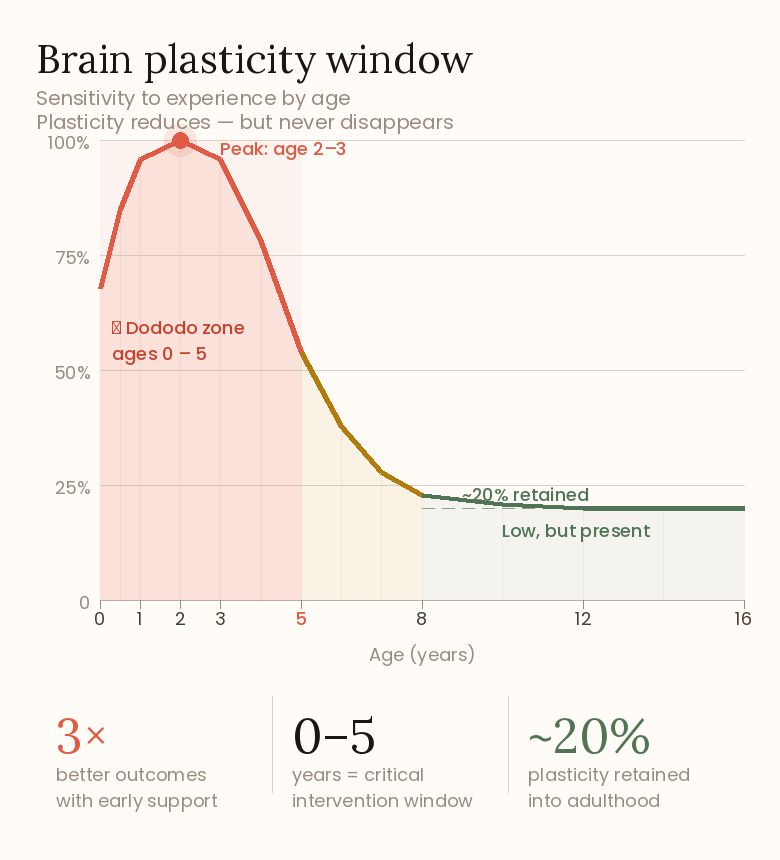
This plasticity is the brain’s capacity to form, reorganise, and strengthen neural pathways in response to experience. And it peaks before age 5.

Key finding: Children who receive structured early intervention before age 5 show up to 3× better long-term developmental outcomes than those who begin support after school age. (Harvard Center on the Developing Child)

What happens during this window is permanent

Neuroplasticity doesn’t disappear after age 5 — but it changes fundamentally. The brain begins synaptic pruning, eliminating connections that haven’t been regularly used. Pathways never built become far harder to build later.

For neurodivergent children — those with ADHD traits, autism spectrum differences, sensory processing challenges, speech delays, or coordination differences — this timing is especially significant. Early support doesn’t just accelerate development. It shapes which neural pathways form at all.


What “early intervention” actually means

Early intervention isn’t about fixing children. It’s about giving their developing brains the right input at the right time — structured activities, sensory experiences, social opportunities, and language exposure tailored to how their particular brain is wired.


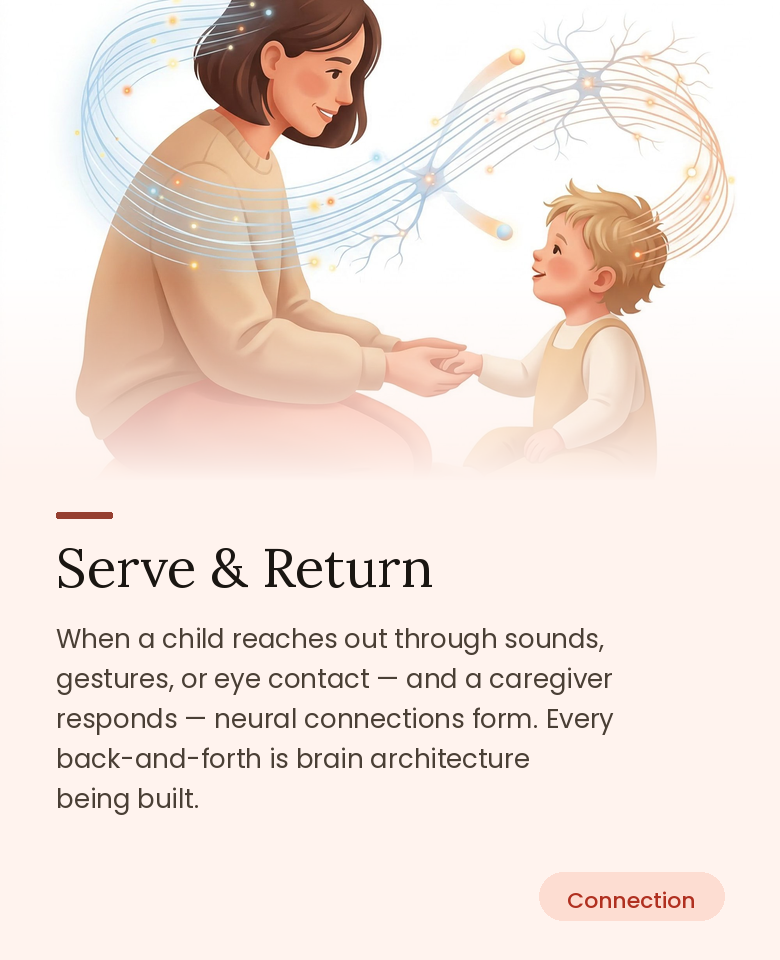
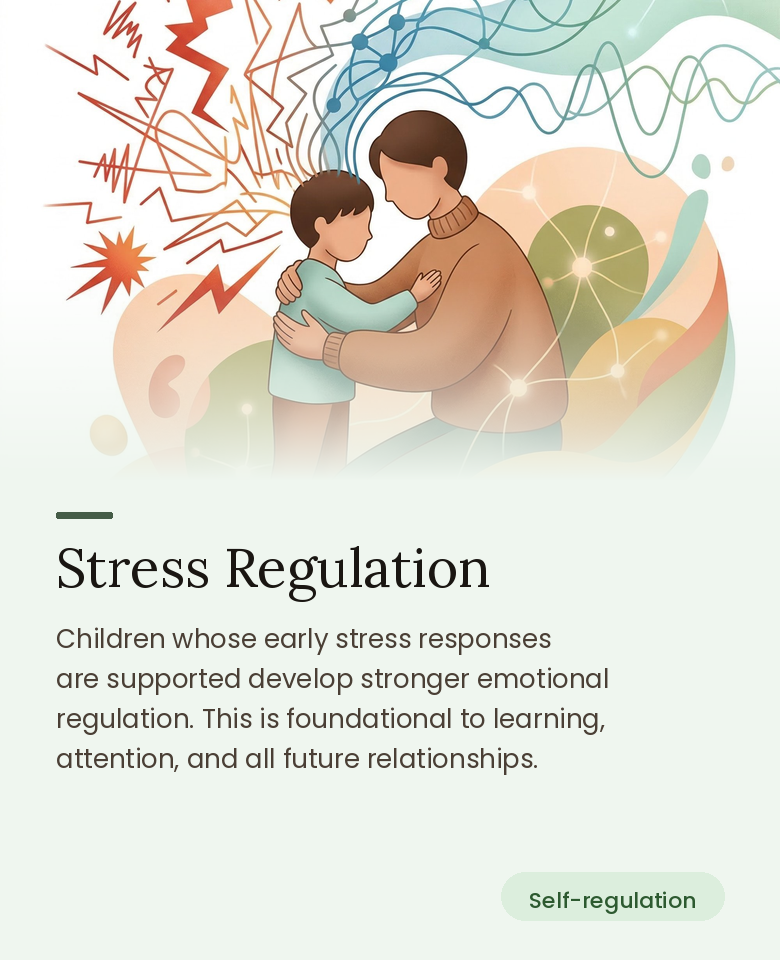
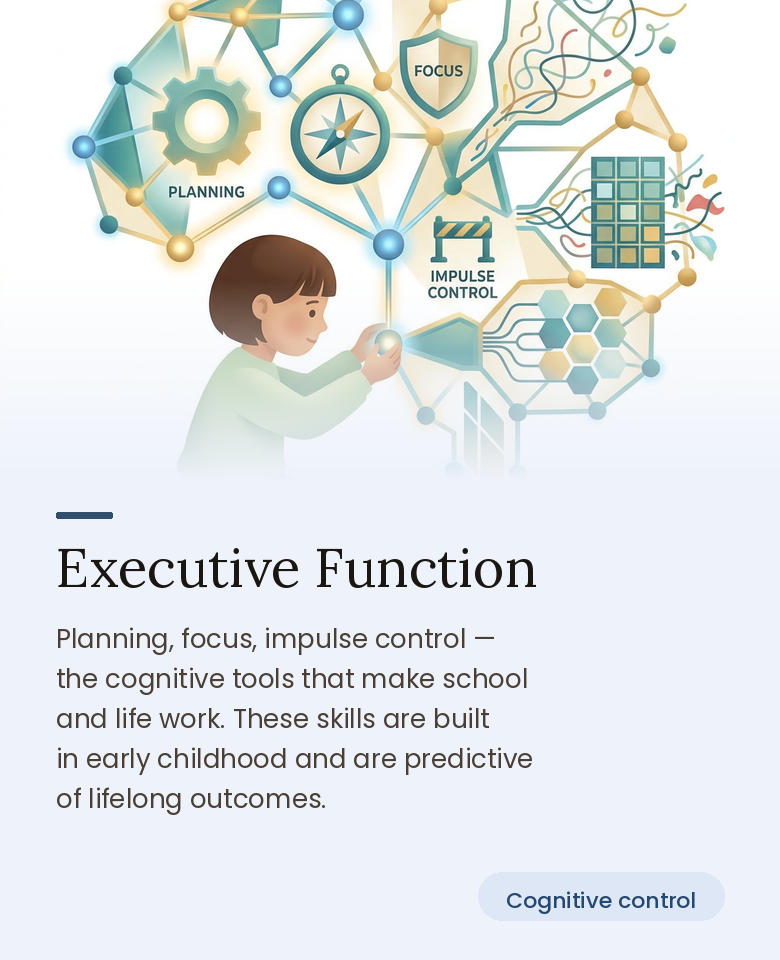
The three pillars of early brain development

Research consensus: Early intervention programs show measurable improvements in cognitive, language, social, and motor outcomes across all neurodivergent profiles. The earlier support begins, the more pronounced and lasting the effect.

Share the Post:

Related Posts

This Headline Grabs Visitors’ Attention

A short description introducing your business and the services to visitors.